Ado and the Weight of Stillness: What "My Panther" Really Means
Adamocles Eden -Spotlight
Most readers first meet Ado as the stillest person in the room. He doesn’t posture, perform, or fill silence to fill it. Appearing in his late thirties to forties, six-foot-three and two hundred fifty pounds, he is built for stillness rather than display, and when he moves, it feels less like reaction than inevitability.
For a long
time, that stillness was the character. It remains his anchor. But this week,
we’re pulling at a thread that has been on the page since The Gaia Project
and only now entered formal canon: why Eva calls him “my panther.”
“Watch
me, my panther. Stalk me later. Hunger now.”

It’s one
of Eva’s signature endearments, la mia pantera, the Italian
phrase she keeps for him alone. For years, it read as metaphor: a predator’s
patience, the coiled stillness before motion. It is that, but it is also
literal.
In certain
angles of dim or slanted light, Ado’s eyes catch and reflect a faint animal
glow, true eyeshine, the same optical effect that makes a cat’s eyes flash gold
in headlights. It is not a power state. It exists beneath the color shifts
readers already know: hazel at rest, gold with Eva in intimate or powered
moments, silver or black in combat. The eyeshine is baseline. It has always
been there. Eva’s endearment is not poetry layered over a personality trait; it
is her naming something she has literally seen in a dark room.
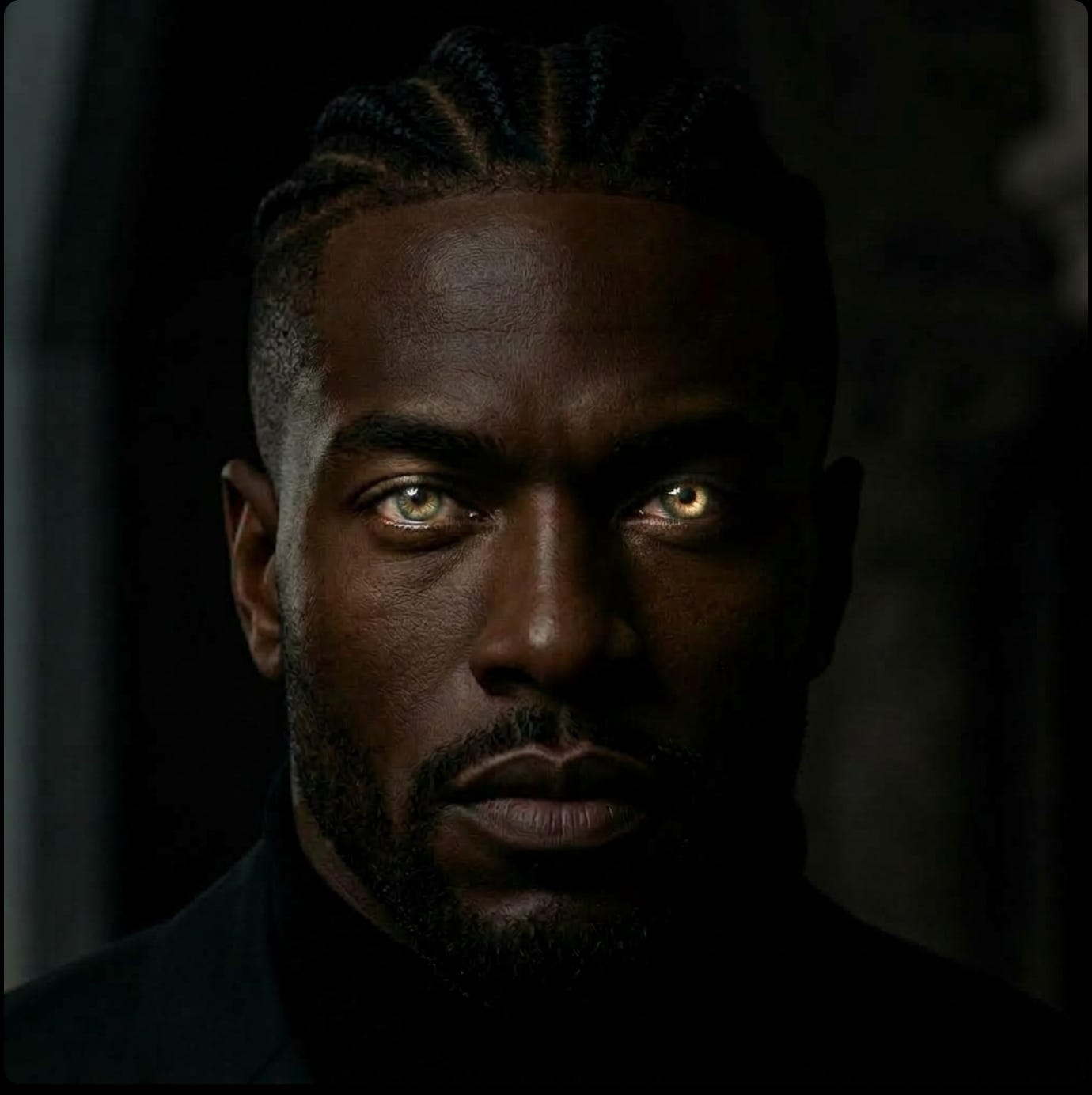
This is
exactly the kind of detail the series hides in plain sight: readers knew the
nickname for years before they ever learned the reason behind it.
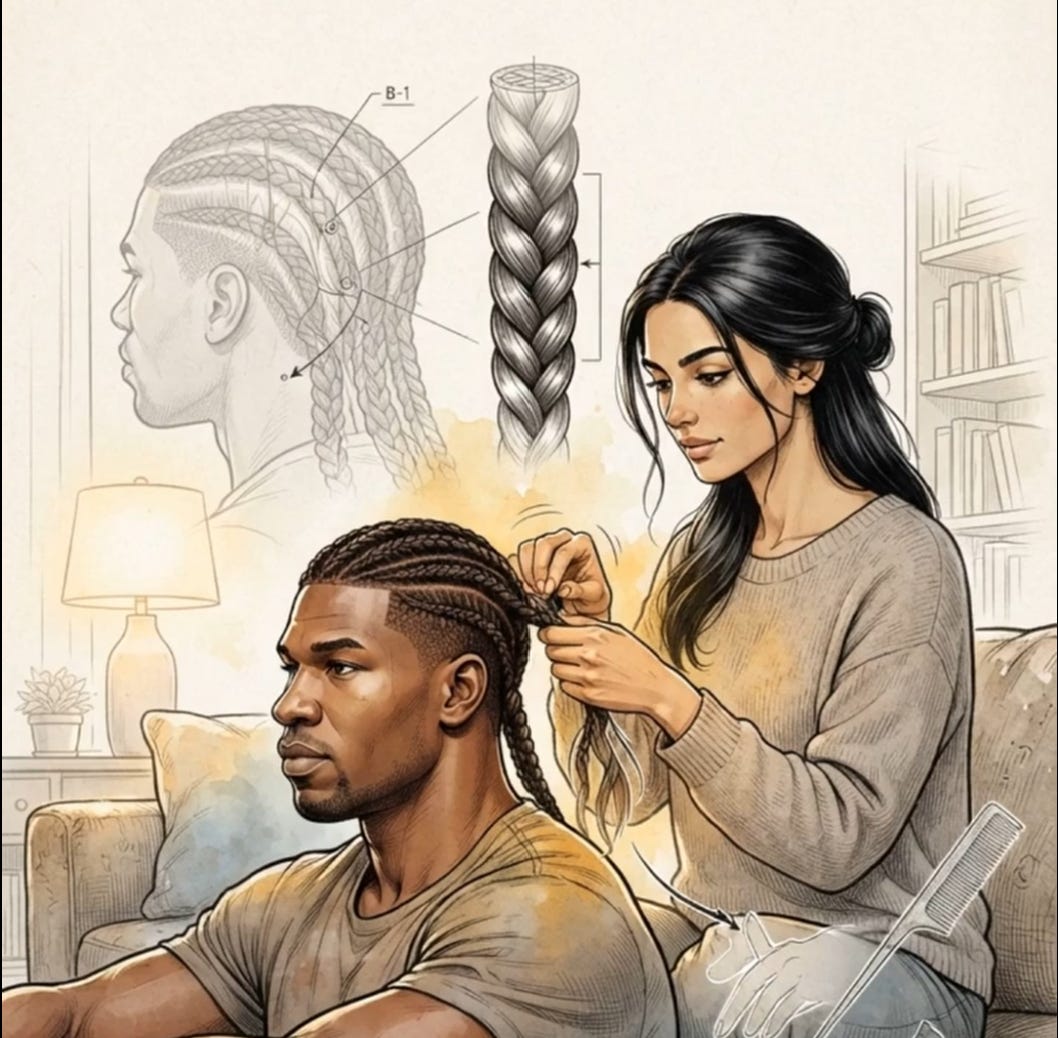
His hair
follows the same pattern. Ado’s hair grows continuously, not as a stylistic
choice but as a trait of his ancient Alpha nature, one he shares with Eva.
Every cropped fade and long braid seen in artwork is the result of constant
grooming rather than a permanent look. Caring for each other’s hair has become
part of their private routine. Compared with everything else they carry, it is
a small detail, which is precisely why it matters. The oldest and most powerful
people in the series still set aside time to sit together in silence with a
comb.
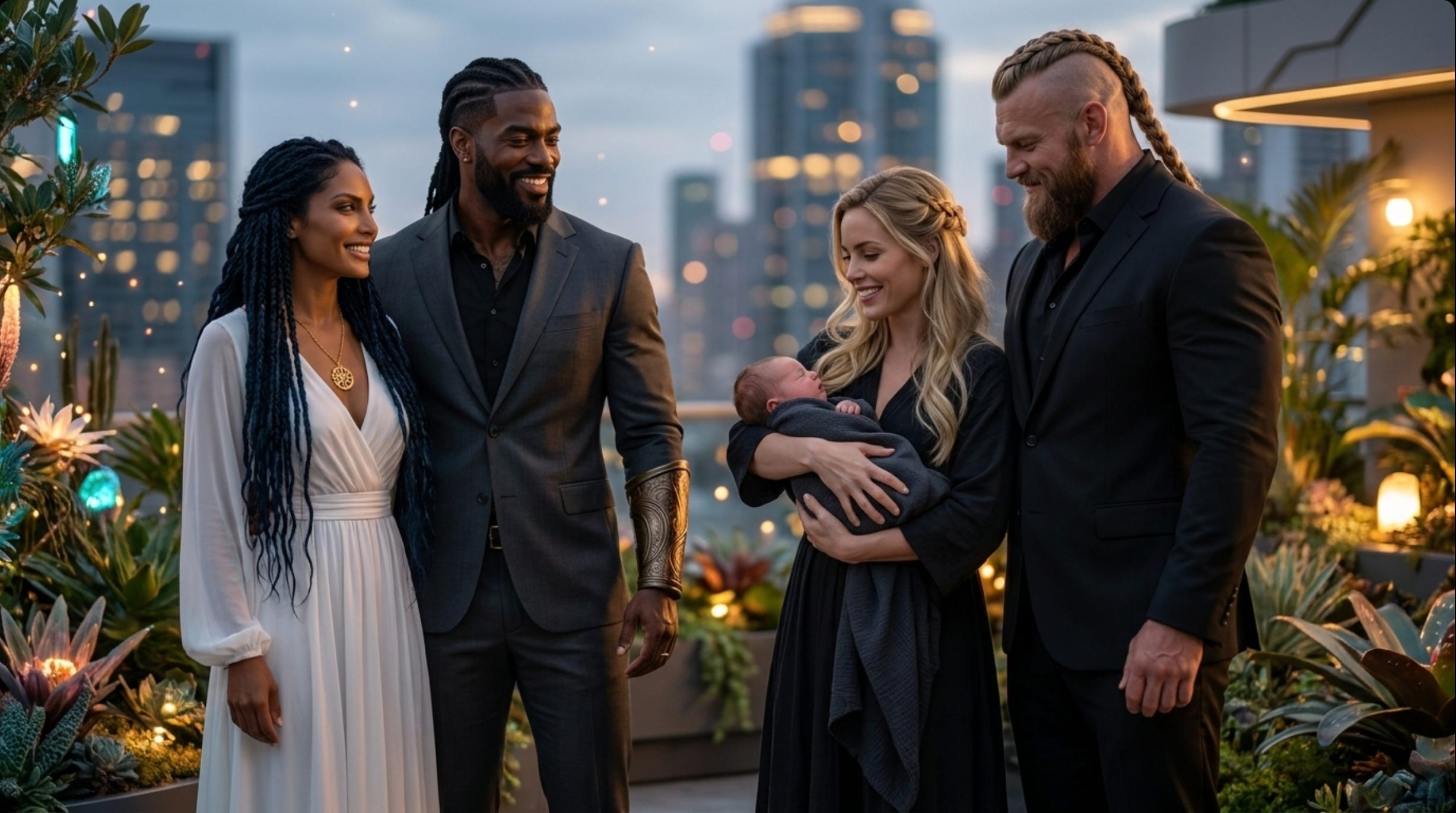
He also
carries a newer role: grandfather. Nils Adamsen, the son of Bors and Nilsa, was
named after his biological great-grandfather, but Ado’s place in his life is
immediate and genuine, not merely symbolic. The detail adds another dimension
to a man so private that strangers often find him impossible to read. The
stillness that feels cold and immovable to a threat becomes patience in the
presence of a child. Bors has long called him “Far,” the Norwegian word for
father. Now a grandson stands within that family circle as well.
In a
fight, Ado’s first instinct is not to draw a gun. Although he carries an M1911
and an M4 rifle as backup weapons, he prefers close-quarters combat, centering
his style on the Alpha Blade and its ability to absorb and redirect kinetic
energy. Rather than generating force himself, he takes incoming power and turns
it back on his opponent. Where Eva’s abilities project outward through weather
manipulation, telepathy, and constructs, Ado’s are rooted in the body itself:
kinetic control, physical mastery beyond human limits, and short-range
teleportation. They are opposites in how they wield power, yet bound together
by the same connection.
None of
this diminishes his role as the quietest presence in the room. Instead, it adds
depth to it. The glowing eyes, the affectionate nickname, the grooming ritual,
the grandson. All of it exists beneath a man the story deliberately keeps
difficult to fully understand. That is the point. Ado never announces who he
is. You only see him clearly when the light hits at the right angle.
—Yenshio


Comments
Post a Comment